Saturday, December 02, 2006

Wanderlust: Cochabamba to La Paz

Hello one and all!


Heading down the home stretch now, I have only a while longer in Bolivia. I have much that I have not gotten to do this time, but that is only incentive to return. Anyone reading this can expect two or three more posts, spaced at about a week apart, after which time, my blog will get a well-earned break, and go into inactivity until my next adventure. Please see the photos (which are not mine!! They are Jenny Lee´s!) below as a supplement to details on La Paz...


COCHABAMBA
I left off last as I was getting onto my bus in Santa Cruz, heading off on another 10 hour night journey to the city of Cochabamba. This bus ride was fantastic in comparison to my usual experiences. We even had entertainment, in the form of a young folk band that just happened to be heading our way. After we left the station, they got up into the isle and started jamming, a complete band with traditional Bolivian flutes, pipes, drums, charangos, and a spanish guitar. Probably the best music I have heard in Bolivia to date, these guys were unstoppable, even as people would shove past them in the isle, they simply squeezed into whatever positions they had to to let whoever it was get past them, and just kept playing and singing. A number of the songs that they played are well-known Bolivian folk songs, and the rest of our bus sang along when we knew the words. So our bus bounced out of Santa Cruz, rockin´ down the highway like the Partridge Family, and every once in a while the bus driver would get really into a song and tap the gas rythmically, so the bus would lurch forward in time with the unwavering musicians. One hell of a time, if only they could all be like that bus, that was a PARTY.
But they did eventually quiet down, and we did eventually get into Cochabamba, the town with what is widely regarded as the nicest climate in the country, with dry, warm, sunny days, and cool nights. The city lies in a wide yawning valley, at a middle elevation of about 2000 meters (around 6000 feet). It is surrounded by towering mountains, including Cerro Tunari, one of the country´s tallest, I am told, and the valley contains a broad marshy lake called Laguna Alalay, and some of the best birding of my trip. This is high desert area, averall shockingly similar habitat to Albuquerque, the sole difference being the proximity to the equator, which limits the variation between seasons. Some of the myriad sayings I heard by locals include (translated) ¨The swallows never migrate from Cochabamba¨, ¨The purest skys in America¨, and ¨Cochabamba´s eternal spring¨. It does indeed seem to be locked in a never-ending Southwestern April, a very nice change from the sweltering tropics.
Watching over the city with outstretched arms is El Cristo de la Concordia, an emmense statue of Jesus perched atop a hill at the edge of town. The statue is just over thirty-three meters tall (100 feet or so), or a meter for every year of Christ´s life. In fact, it is just a hair taller than the famous Cristo Redentor in Rio de Janeiro, Brazil, a fact that the locals cherish (even the Lonely Planet guide noted this). They claim that this is because Christ actually lived just a little longer than thirty-three years, so they are justified in one-upping Brazil. This was my first stop in Cochabamba, definitely impressive. You can take a taxi to the top via a long desert road, hike up a huge stairway from the base of the hill, or take the new cable car to the top. Even here the altitude hits hard, I chose to taxi up to the top and hike back down. Great views from the town at the top, lots of pilgrims from around the country were here as well, the first time I have seen tourists from within the country.
My next two days in Cochabamba were affected by a cold that I picked up, undoubtedly from one of the busses, so I spent my days quietly walking and birding around the lake and into the hills around town, focusing on acclimatizing to the altitude and trying to shake the cold, the remenants of which are still lingering today. My body gets very sulky when I subject him to sudden altitude changes, and getting a cold on top of that turned him absolutely pouty. I drank a lot of organge juice to try to convince him to snap out of it. I did have to be hitting the road though, so once I was back to about 70 percent, I hopped on the bus again, and after a brief stop in Oruro (the New Jersey of Bolivia. As soon as I got into town, one look was all I needed to catch the next available bus out. A really uncharming town to me, even by Bolivian standards), I was heading of to the capital, the sky-high city of...
LA PAZ
My return to the city where it all started, I have time to actually get to know the city, rather than my previous experience, simply passing through the airport. La Paz is the land of altitudinal superlatives, and has nearly the highest everything; the highest capital, the highest international airport, and is surrounded by some of the highest mountains in the world. This is the Bolivia that most people see, and tourism is a much more visible presence here, much to my chagrin. While this is the first town I have been in where some level of English is spoken, it is usually just enough to pester me while I am shopping. The most common phrase I have heard in English is ¨You buy, is very pretty Meester.¨ Spanish is even a second language to many people here, Aymará and Quechua are the main languages spoken by many of the people here, especially the Cholas (traditionally dressed women that live in the cities). These two languages date back to Pre-Spanish and even Pre-Incan times, a strong reminder of the rich past that remains such a visible part of the culture´s present.
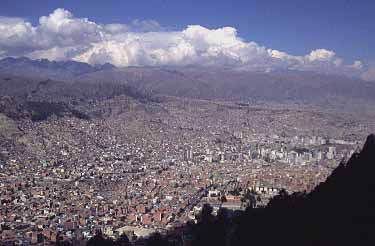
I met up with Jenny Lee here, a wonderful girl and great friend from way back, and we spent a couple days wandering around the city and trying to recover from the spinning dizzyness and pounding headache that herald the arrival of Soroche, the Altitude Sickness. The highest point in the La Paz area is at the lip of the canyon in which the city hunkers down into, a sprawling ghetto known as El Alto (The High Place), at just a bit above 4000 meters. To give you a sense of perspective, the summit of Mount Ranier is at 4392 meters, so to carry on regular life at this altitude is a challenge. The Paceñas (La Paz-ites) will tell you to walk slowly, eat small amounts, and ¨duerme solito¨, to keep from feeling El Soroche, which seems biologically sound, since strenuous excercise and big meals draw blood (and therefore oxygen) away from your brain and towards other, technically less important body parts.
As for the general character of La Paz, I think the photos in the two previous posts speak for the town far better than I could. Hopefully you can get a sense of the bizzare contrasts and contradictions that make La Paz, and indeed Bolivia in general, the most fascinating and quirky place I have ever seen. By way of example, in a single day in the same city, I saw a political gathering and protest, a speech by the president, Evo Morales, an inpromptu folk music performance mid-march, countless dried Llama fetuses for sale in the Witches´ Market, the most beautiful painting I have ever seen, a number of signs prohibiting public urination, a Jazzercise work-out in a modern gym, skyscrapers, mud huts, Cholas with cell phones, advertisements for charango lessons and internet classes, and a person in a Zebra costume directing traffic for a parade with a homemade sign that read: Cross San Pedro Blvd two blocks down, don´t be a ¨Donkey¨. Sigh. Boliva.
BEASTIE REPORT
Not a whole lot to report here besides birds, the cool nights at these high elevations pretty much cut most bugs, reptiles, and amphibians out of the picture. So that said...
MAMMALS: Now that I am in the Altiplano, Bolivia´s most celebrated fauna have become obvious: Llamas and Alpacas. Goofy looking buggers, but they serve the local Campesinos well for pretty much all they need, pack animals, wool, meat, and even milk. Not exactly wild animals, Llamas and Alpacas are descended from wild Guanacos and Vicuñas, respectively. But they are extremely Bolivian, there are very few tourism posters here without an obligatory Alpaca in the corner. Other than that, the only other mammal I saw was a huge rat running accross the road in Cochabamba that my cab driver tried to hit.
BIRDS: Some of my best birding of the trip, lots of new species. Lots of desert finches and sparrows, waterbirds, and the Aplomado Falcon, a member of a family that is very near and dear to my heart (photo right). Also the very flashy Blue and Yellow Tanager (left).

Friday, December 01, 2006

Photo Break (2 of 2)


I thought I would give you all a break from reading huge blog entries and instead post a bunch of photos that I was actually there for the taking of. The following photos are thanks to Jenny Lee, a good friend from Junior High that I met in La Paz, where I currently am. Most of these were taken at a political rally for the rights of Campesinos (country workers, or peasants from the country), and we were even treated to a speech by the Bolivian president, Evo Morales. If you click on any of the images, you should get a larger version to pop up.
What you will probably notice right away is the traditional dress that many of the people in the photos are wearing. This is just pure Bolivia, a stark contrast between ancient tradition and hope for a swift and better future that embodies the general way that Bolivia just seems to make work.


Look closely at the photo below, and you can see a man dressed up as a condor standing on top of a monstorous statue´s head, who flapped his wings gloriously when President Morales said something particularly pleasing to the crowd. Evo Morales is the man in a white shirt on the stage who is wearing a lei as well. I don´t know why, I was definitely curious, though.


The checkered rainbow flag is the symbol and flag of the Campesinos. The following photos are from the parade/protest that marched down the main streets of La Paz after Evo´s speech.


Photo Break (1 of 2)


My Bolivian bug collection to date. Some real doozies.


The rest of the photos below are from the markets along Calle Sagarnaga, also known as the Witches Market, for good reason. You can see a number of potions, salves, and powders on the shelves, as well as the freakiest masks ever and a wide variety of dead animals and their former body parts. Escpecially note the dried Llama fetuses in the bottom photo, they are buried underneath new buildings as an offering to Pachamama, the Earth Mother, for building on her land. If someone from Clemonson homes wants to send me a credit card, I´ll bring home a big bag of fetuses, I bet it raises property value to have an aborted camelid underneath the foundation...

Thursday, November 23, 2006

Wanderlust: Santa Cruz to Amboró


Hi guys!


I hope everyone is very very well, and I wish you all a very Happy Thanksgiving! Hopefully everyone out there is happily stuffing themselves full of great food and falling into turkey-induced comas in front of a football game. In fact, if you are reading this, which means that you are not feasting, sleeping, drooling, or lazing about, and it is currently Thanksgiving, I order you to get off the computer and engage in one or more of the above activities immediately. Thank you.


As usual, before I get to rambling, I have a couple of quite notices. First, I have been informed of a growing interest in my little blog from a number of people who I have not met yet in person, and I would like to say Thank You to all such persons for their interest, I am extremely flattered. Second, some confusion regarding the photos imbedded in the blog has arisen. I would like to clarify that these are NOT my photos, but were plucked from the web like so many copywrited cherries, and you can view the photos in their natural internet habitat by clicking on them. My own photos will be posted once I get home and develop them. Lastly, a continuing thank you to all those who valiantly keep reading and to all the emails I have gotten, love ´em all. Enough of that, lets get crackin´. The adventure begins in...

SANTA CRUZ
I arrived in Santa Cruz bleary-eyed, cranky, and close to insane, as my 10 hour night-bus from Trinidad was predictably trying. A number of laws exist for long-distance buses here. For example, each bus must contain at least one screaming child, one ponderously overweight man with poor hygene, and one group of at least 6 hyperactive, thirteen-year-old girls that have decided to treat the bus as a sleepover. The huge man is required to sit next to me and take up most of my personal space, and is also required to release whatever gasses his body is producing at the moment in the loudest way possible, and directly at me. The girls are required to sit in a protective giggling bubble around my seat, and to kick my chair, abruptly recline theirs and smack my knees (if they are in front of me), shout continuously to the others to maintain complete realtime contact with one another, and to maintain a constant vigil on me by peeking through any crack of space between my seat and theirs and shrieking with excitement every time I open my bloodshot eyes and ¨spot¨ them, in spite of their clever hiding strategy. The baby must sit directly outside the teeny-bopper perimeter, and must scream without pause for sleep, food, or breath for the full duration. My window is also required to be welded shut to prevent me from diluting fat-guy gasses or from attempting to crawl out onto the roof to get some sleep.
So as I stumbled out of the bus and met my blurry universe, I made my way to a man shouting at me in a friendly manner to get in his yellow car (a taxi?). He then took me to some place that he said had beds (a hotel?), where a nice old lady took some of my money (the owner? a begger? a mugger? Hillary Clinton? impossible to tell.). After a shower and enough sleep to get a grasp on that slippery thing called reality, I stuffed all of my stinky, pulsating, possibly sentient field cloths into a bag and trudged off to the nearest laundrimat. My conversation with the lady there went like this:
¨I would like these clothes washed, please.¨
¨HAHAHAHHAHA (snort) HAHAHAHAHA!!!!!¨
¨Seriously.¨
¨Oh.¨ She warily eyed me as she sifted through the pile. ¨What color were these socks?¨
¨White.¨ More wary staring. Her response was slow and careful.
¨And what color would you like them to be when I am done?¨
¨White.¨ She stared at me. I didn´t say anything. She looked down at the pile, then back at me.
¨Kind of white?¨ I offered.
She grunted and told me to get out and come back tomorrow, when my laundry would be done, or at least subdued enough that it wouldn´t bite me when I tried to put it on. Sounded fair.
I left her poking at my pile with a meterstick, presumably to determine its abilities, and took off to run errands around town. I hung out in the central plaza and had lunch with a young guy that came up to me to ask for help with his English homework. I met quite a few travelors as well, and had dinner and a deep discussion about life, the universe, and everything (42) with some Australian guys in an Irish pub on the square. The next day, I gathered myself up, picked up my laundry from a very surly laundry lady, and hopped into a collective taxi to the small town of Buena Vista, the gateway to Amboró National Park.
BUENA VISTA AND AMBORÓ
Buena Vista is a sleepy jungle town two hours northwest of Santa Cruz, and sits at the edge of the Andean foothills and Amboró. The central plaza features another Irish Pub (owned by the same guy that owns the one in Santa Cruz we found out. He let us swim in his pool) in a expresso-stand style kiosk, flowering trees, and the scariest damn public telephone I have ever seen. The booth was shaped as a 15 foot tall snarling Jaguar with fangs and claws bared standing on its hind legs, with the actual phone attatched to what would have been its waist. This gave the impression that, when someone actually used the phone, an enormous posessed Jaguar was about to tear to pieces some poor idiot who was foolishly grasping the cat´s Private Area and holding it thoughtfully to their ear.
It was here that I met three other travelors, a couple of Australians named Mark and Susan, and a British girl named Maria, who were heading to Amboró as well, and I joined up with them. After a night in Buena Vista, we headed off into the park for a couple of nights with our soft-spoken guide, Hernán. He is a birder too, and we had a great time babbling away about birdy stuff as we hiked, and he helped me get my eyes on some very cool birds. We bounced along the old dirt road to the park in beat-up old jeep, stopping at a small field station at the end of the road. From there, we backpacked into the park for a few more hours until we reached our campsite, a patch of sand underneath an overhanging rock face on the side of a rolling mountain stream. We spent the rest of our time hiking among the towering rainforest and soaring cliffs, hiking into waterfalls and just tromping around the area in search of wildlife.
After our days in the park, we headed back to Buena Vista for the night, and took off on another bus for Santa Cruz. The bus was ancient and crowded, but we passed the time by guessing where the bus´s strong aroma had come from, and by watching Mark teach the kids on the bus The Chicken Dance. The next few days in Santa Cruz were unbelievably lazy, as our main activities included going to the All-you-can-eat buffet on the corner, sleeping, swimming in the pool at our hostel, watching some occasional TV when it worked, and wandering around the city. We went to a music bar one night, and saw a really great Bolivian group play blues-inspired Clapton-esque music, but that was as adventurous as we got. It was great.
But eventually, we had to drag ourselves away and get back to our travelling, so we went and bought our bus tickets, and went our separate ways. The relationships you form backpacking around are completely unique, you meet, become good friends, and say goodbye within a few days, but you feel like you´ve known them forever, its like a friendship on fast-forward. Anyway, we all said goodbye and got on our respective busses, mine taking me to Cochabamba, where I am currently writing from. Cool city, I´ll talk about it in the next post, in a few days. And now for a very special edition of...
THE BEASTIE REPORT
The curse has been broken...
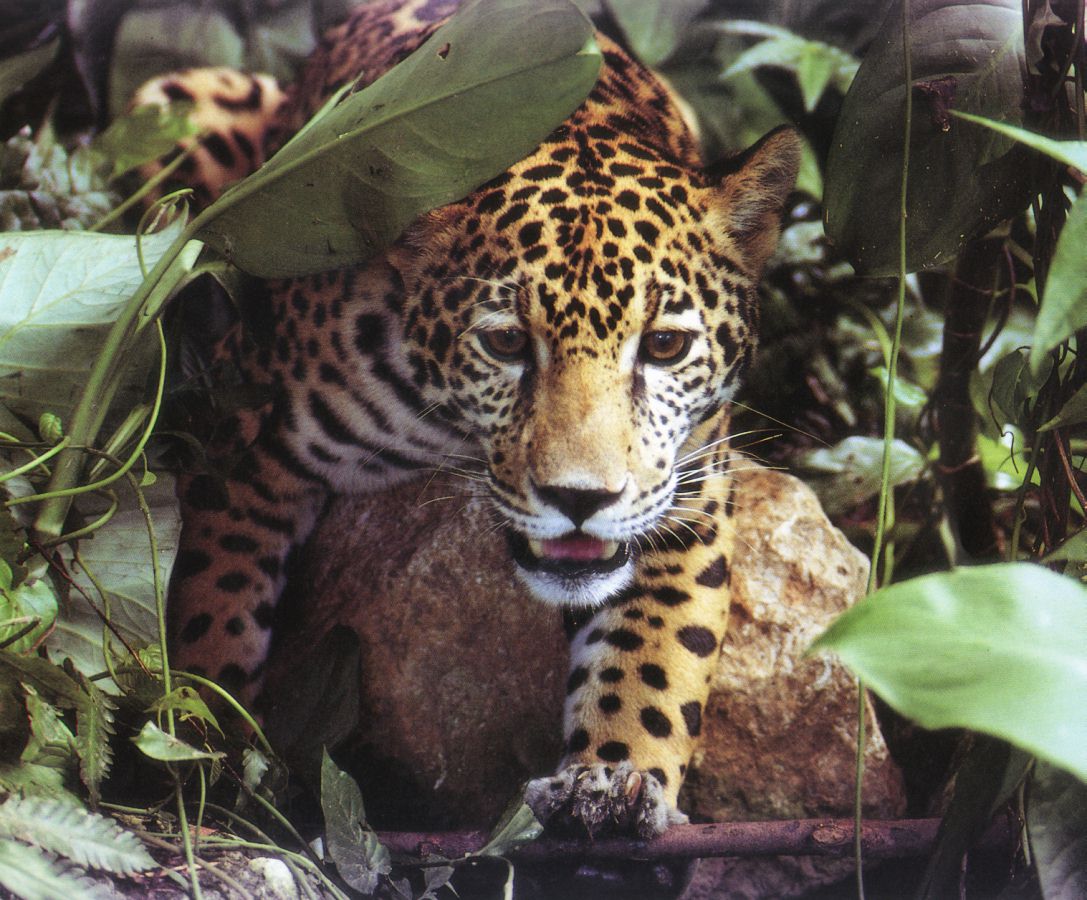
MAMMALS: Panthera onca, the Jaguar, know here as ¨Tigre¨ (tiger). As we were trudging out of the park, Hernán stopped dead in his tracks suddenly, causing everyone else to smush together accordian-style. I looked beyond him just in time to see a flash of movement, a low-slung body with rippling golden, spotted fur stalking through the trail with liquid grace and power. The shape vanished into the growth at the side of the trail, and reemerged through a gap in the undergrowth further in. The outline of the animal moved slightly, and as it hit a patch of light, shadows gave way to a huge head with bulging jaw muscles, and a pair of eyes that cut through you and lock you in place, eyes that only cats posess. A flicker of gold and black, and it vanished, melting into the impenetrable forest. Hernán hadn´t moved at all, but his eyes were shining with the same excitement and reverence that I felt pounding in my head, and he breathed one, whispering word. ¨Tigre...¨
Also seen were a troop of 30 or more Spider Monkeys, Howler Monkeys, and a handful of squirrels.
REPTILES AND AMPHIBIANS: Poisin arrow frogs (Phyllobates), toads, tree frogs, and a very pretty False Coral Snake
INSECTS: An endless parade of outlandishly patterned and colored butterflies, and a huge firefly that could make not only the characteristic lime green light, but also a flame-orange flash from its abdomen.
FISH: I am not sure what they are, but the river was full of some Sucker-like fish, and one species that unfailingly bolted out of hiding to bite everyone directly in the nipple, and then turn and bolt back into hiding. I have absolutely no idea why they do this, but it makes swimming an interesting activity.
BIRDS: Not a whole lot of new stuff, but some very cool ones, Oilbird, Southern Nightengale-Wren, Military Macaw, Channel-billed Toucan, and the unbelievable Paradise Tanager (photo -->).
I´ll try to add some photos to this post later, my computer here is being stupid at the moment. Until next time, you stay classy, Planet Earth. Happy Travels...
-Chris
Cochabamba, Bolivia

Tuesday, November 21, 2006

The Beni: Notes From the Field (7 of 7)

Well, it had to come to an end sometime. I am out and done working in the Beni (for now), so by way of a wrap-up, I thought I would insert some exerpts from the Journal I´ve kept out in Betania, of some of the more memorable experiences and anecdotes. So without further ado...

********************************************
I have more names and nicknames here than I have ever had in my life combined up until this point. For some reason, my name causes a huge amount of problems for everyone I meet, and not one has yet been able to pronounce it correctly. I indroduce my self using both Chris and Cristóbal, my spanish name, but the outcome is always hugely different. The list of names I answer to (spelled for English pronunciation) includes ¨Krees¨, ¨Kreet¨, ¨´Reek¨, ¨Creeptobal¨, ¨Creeps¨, ¨Creestian¨, ¨San¨ (after my namesake saint), ¨Cripsteefor¨, and ¨Creps¨. In addition, Latin Americans often hand out nicknames that would be considered less than flattering in most other cultures, to identify a person by their more prominant characteristics. In this way, my list of nicknames includes Gringo (white guy), Flaco (skinny guy), Parabero (macaw guy), and my personal favorite, El Garzón (The Heron). No offense is meant or taken, but it makes it hard to figure out when someone is talking to or about me.
*******************************************
Gato´s kids are driving me absolutely nuts. He and his family have moved out to stay for a while at Betania since the rains have begun, as Guantanamo doesn´t have a really reliable source of clean water right now, so I´m surrounded by Gato´s flock whenever I am at the house. There are 7 of them, but the oldest two are all right, they are always out helping their Dad, but the rest... Their Dad is always in the field, and their Mom is always too busy to keep a super-close eye on them, so they are just the most snot-nosed, lawless cretins this Earth has ever seen. The little hellions follow me everywhere, always shrieking or babbling something, always hitting each other or me, fighting, getting under my feet, poking around in my stuff and playing with everything in my pack (Gato put a serious stop to that when he found them playing with my bird book, the good ol´belt still does the trick here), invading my personal space, and otherwise just shattering my patience and nerves. One of them is always crying at the top of their lungs. They fight incessantly. They abuse Betania´s puppy, smacking him, dragging him around by his tail, makes me furious. They listen to me when I tell them to stop, but go back to doing whatever they want when they think I can´t see them. Their favorite games to play with me are to stand right next to me while I am reading and just stare, or try to watch me pee. They crawl around underneath me while I´m in my hammock and poke my tatoo with their grubby little fingers until I wake up and yell at them. They fiddle with my tent while I am inside. I think I´m going to kill them.
I did get a bit of relief from the little turds for one day. They had been throwing rocks at a bees nest all morning, and finally succeeded in hitting it, with a predictable outcome for everyone but the little demons. A chorus of screaming and crying louder than normal caused me and Alonso and Negra, their mother, to go running in their direction, and once we reached them, I did something that surprised me. I laughed. Not out loud, but inside my head, my brain was howling with malicious glee, rolling around on the floor of my skull and clutching his sides, or cerebellum, or whatever. I laughed as we dragged the kids away from the nest. I laughed as I brushed bees off them. I laughed as they rubbed their stings and whimpered for the rest of the day. And I did audibly chuckle when the eyes of the absolute worst one, Cali, swelled shut, and he spent the rest of the day bonking headfirst into tables, doors, and trees. Negra knew he was alergic and had already given him his medicine, so he wasn´t in danger, he just looked hillarious. The fact that I felt no remorse whatsoever over this made me feel a bit guilty, until the next day when everything was back to normal, and then I remembered why I didn´t in the first place.
*******************************************
The rains have started, breathing life back into the parched Beni. What was a scorched, cracked desert a week ago has become a vast sea of rippling grass, laced with numerous little pools and rivulets. All the trees have gotten their leaves back and many have burst into bloom, the islands are dotted with flame-reds, purples, whites, blues, and pinks. The animals have shifted as well, Pampas Deer suddenly have become more common, the caimen have started to feel their oats and are bellowing all day and night, the birds have started singing with more urgency, and everything has babies. The frogs must be in heaven, their habitat has increased in area by a thousandfold, and they have been busy, the shallow film of water that covers the savannah is alive with tadpoles. The days are clear and hot, and thunderheads build all day, and each night the sky tears itself apart. Lightning laces the clouds and stabs down into the plains, followed by cracks and booms of thunder that shake the ground and pulse through your chest. Any fires the lightning starts are doused by a wall of water, pouring out of the bloated black clouds like a waterfall.
******************************************
The time has come to leave Betania. Today was my last day in the field, saying goodby to Itchy, and making the long trek for the last time. As I opened the door to the Bat Cave, I saw Alonso sitting in my hammock staring blearily at the ceiling, humming a nameless tune with a bottle sitting on his stomach. It turned out to be our bottle of rubbing alcohol that we use to disinfect our equipment, and had hidden to avoid the vaqueros getting into it, but he found it anyway. He noticed me and split into a broad, glassy-eyed grin.
¨Creeps-ta-for!!¨ he slurred.
¨Alonso, did you drink our alcohol again?¨
¨Sí!¨ he happily replied. I sighed and started to put my stuff away. We had already explained to him that we needed that alcohol once, and arguing about it was pointless. He watched me for a while, and then asked ¨Creeps, what do you want in life?¨ Alonso gets really lifey when he is on rubbing alcohol. Even so, his question caught me off guard.
¨I don´t know, let me think.¨ I never really thought about it I guess. I sat down and had a good think, and Alonso passed the time by quietly reading the warning label on the alcohol bottle. Once I found an answer, I was surprised by how simple it was. I suppose all I really want is to be happy. I told this to Alonso, and he nodded thoughtfully, and handed me the empty bottle. I set it down next to me and enjoyed my last few moments in the Bat Cave with Alonso, shooting the breeze about the meaning of life.
******************************************
As I settled into the plane to take me away from Betania, I was struck by something strange. I am actually going to miss this place. The inconvenience of being so far from everywhere, the rythms, the people, even the evil farm animals. There were times when I felt like I was serving a sentance against my will here, and yet I watched with a sense of loss as we circled the ranch once and turned south towards Santa Ana. Chalk one up to Stockholm Syndrome, I guess. My last impression of Betania as we glided overhead was of an endless, shimmering green mirror, the water reflecting the sun through a rich carpet of palms and grass. I watched as a flock of huge white Egrets drifted by beneath me, took a breath, and prepared to re-enter a world with plumbing and electricity.
****************************************
So that´s it folks. Betania is behind me, and the rest of Bolivia lies ahead. The world is my oyster, and it´s time I got to shuckin´. The next post will pop up soon, and will chronicle my first week of joyriding in the rest of Bolivia. My tenative itenerary is as follows:
11/16-11/17 Buena Vista, and I intend to do a couple of day trips into Amboró National Park, returning to base camp in Buena Vista each night.

11/18 Return to Santa Cruz to catch a bus to Cochabamba, travel through night.

11/19-11/21 Cochabamba and surrounding area, day trips to nearby parks. I am stopping here at a middle altitude to gradually acclimatize, rather than going straight from sea level to 4000 meters

11/22 catch a bus to Oruro and beyond to Luaca National Park in Chile, just accross the border from Bolivia. Nights camping at Ranger Station right next to the road to La Paz.

11/23 Lauca

11/24 Catch bus back to Oruro, and then to La Paz. Night in La Paz.

11/25 La Paz

11/26 Either catch a bus to Coroico or another town in the Yungas, just east of La Paz, depending on what is the safest. The road from La Paz to Coroico is notoriously bad, I won´t go on it unless I can find a safe way down.

11/27-11/29 The Yungas.

11/30 bus back to La Paz and onward to Sorata

12/1-12/2 Sorata

12/3 Bus from Sorata to Lake Titicaca, the town of Copacobana.

12/4 Copacobana, Isla del Sol

12/5 Bus back to La Paz

12/6-14: La Paz
Feel free to follow me around and google my spots, expect the next post soon!
Until then,
-Chris
Santa Cruz
Bolivia

Wednesday, November 15, 2006

The Beni: The Birds (6 of 7)

And now for the Really Good Stuff...

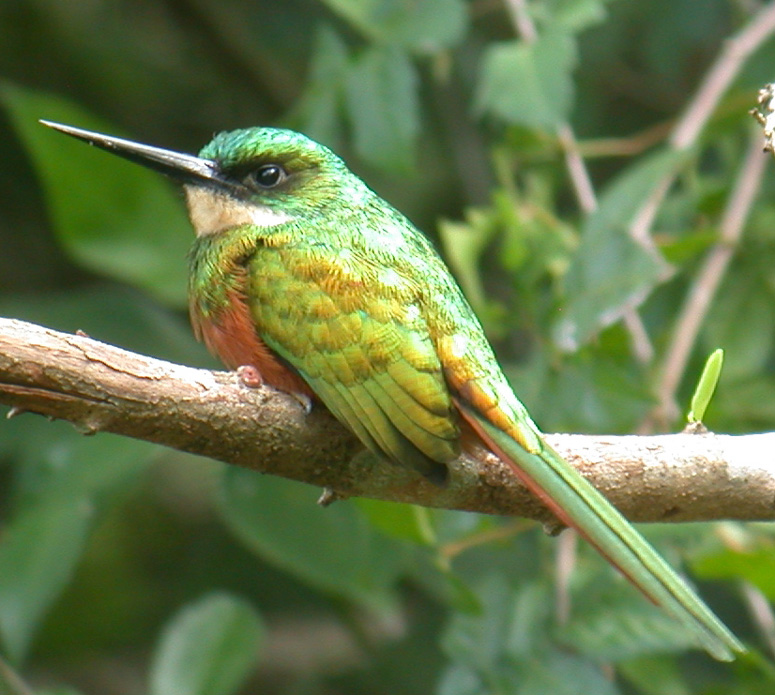
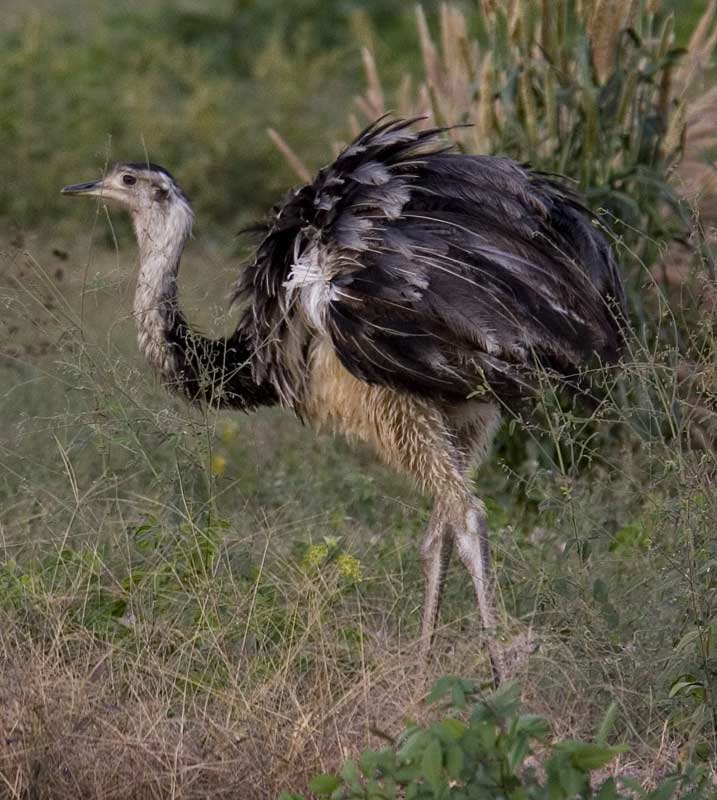
I have absolutely no complaints about my birding on this trip, I was given a list of the area by Toa that some ¨professional¨ birder put together, and got turned loose like a kid in a candy store. The origional list had recorded 184 species, and I ended up with a list for Betania of 223 species. I actually got to the point where I stopped seeing new birds every day, which is a little wierd for the tropics. Anyway, I can think of one serious birder that is our there in reader land, and I will send you a complete list once I can compile it. The rest of you I am sure would be much less than excited to read the full list, so I will fill most of the post with pretty pictures of some of my favorite species that I saw, which I have merrily stolen from the net. The only birds that I will talk about in any detail are the ones that I studied, the nearest and dearest to my heart...
Blue-throated Macaw
The world´s rarest wild Macaw, with only a few hundred in the wild and a few thousand in captivity. The photo at the top of the post is of a pair of captives, I should have some cool photos to put up as soon as I can develop them. Anyway, they are huge parrots, with bright yellow bellies, turquoise blue backs and throats. We almost always find them in pairs, squaking loudly as they wing overhead, their long tails and strong wings give them a powerful, stable flight profile. I was in charge of keeping up with four pairs in the vicinity of Betania, only one of which actually got around to laying eggs and raising chicks. This pair made their nest in the hollowed-out top of a dead Motacu palm, and are the ones that I am the most familiar with and am the most attatched.
The adult male is named Ala (wing) and the female is named Oración (prayer), a particularly appropriate couple of names, since the specie´s future is a long way from certain, and our hopes literally are resting on a Wing and a Prayer. They hatched three eggs initially, and the three chicks were less cerimoniously named Itchy, Scratchy, and Poochy. Poochy got pushed out of the nest within the first week by Itchy and Scratchy, and unfortunately died of exposure before we returned the next day. Scratchy was also later killed by Itchy, as part of a brutal but common practice that a lot of large birds do, the seemingly cruel art of Siblicide.
I am sure that those of you with siblings can remember times when you would have liked nothing more than to throttle or lock a brother or sister outside forever, but fortunately it doesen´t work that way with us (I hope), else I would have spent a lot of time outside with a sore neck in my childhood. The basic idea is that the birds are hedging their bets by laying more eggs than they can possibly raise to adulthood, so if one doesn´t hatch or dies, they still have the others. If all goes well with the eggs, though, you end up with three chicks spaced about three days apart in age, and the youngest and smallest almost invariably dies either by parental neglect or at the malicious beaks of its larger, older siblings. As the remaining two get bigger, the same fate often befalls the middle chick. Itchy is the oldest, and therefore strongest, largest, better-fed, and overall better-off bird than poor Scratchy. We don´t have permission or the capability of hand-rearing the chicks in the field (I´m told that this will be happening with the project next year), so we could do little but wait and watch and hope that Itchy would tolerate Scratchy. Given their namesakes, I guess I shouldn´t be surprised, but it was still absolutely heartbreaking when the inevitable happened. It is an unfortunate habit for a critically endangered species to have, but hopefully with our findings this year, something can be done to help the situation next year.
Itchy has gradually morphed from a naked, blind little lump of pink skin into a loud, beautiful, and extremely spunky parrot. When he was younger, I used to calm him down by letting him chew on my finger while we took our measurements, but that is no longer a good idea, as his bill and strength have increased to the point where he can do some real damage, making life difficult for Uncle Chris and Uncle Paco. He definitely has a serious chip on his wing, which gives me hope for his long-term success in life.
At any rate, they are beautiful, wonderful birds and I was very sad to leave them. Best of luck to them all.
And now, as promised, here are some of my favorites of the trip thus far...

Monday, November 13, 2006

The Beni: Beastie Report (5 of 7)

Hello again one and all!


Well my field work has officially ended here in Bolivia, and I have emerged from the depths of the Beni for the last time. I am going to be in steady contact with the internet from here on out, and will continue to post on my little adventure down here. More on that to follow with the Beni wrap-up post.


Which brings us to my current post, the complete, the fantastic....


BEASTIE REPORT
NOTE: As I realize that many of you have a lot more on your mind than critters, I am trying to keep the beastie report as lively as possible, with lots of photos. Please pay no attention to the numerous flagrant copyright violations.
Fish
This is a pretty short list, as the water in the Beni is usually the color of a good látte, and thus is not the best for fish-watching (snorkeling here would pretty much be the single stupidest thing you could ever imagine, and I have imagined some pretty stupid stuff in my day). That said, I have managed to positively identify the few that we have caught and a couple others
Red-bellied Pirhana- the nasty little fish of lore, they dominate our regular catch. I can personally testify to how sharp their little teeth are, and I have the scar to prove it. By way of experiment, we tied up our chunk of bait at the end of our day one day and watched as the water in the vicinity of the meat began to move, slowly at first, but then came to a raging boil, as dozens of the little beasts threw caution to the wind and demolished our sizable chunk of cow within 15 horrific and seriously fascinating minutes. The whole skeletonize-a-cow-in-three-minutes thing is complete bull, but they are a force to be respected nonetheless.
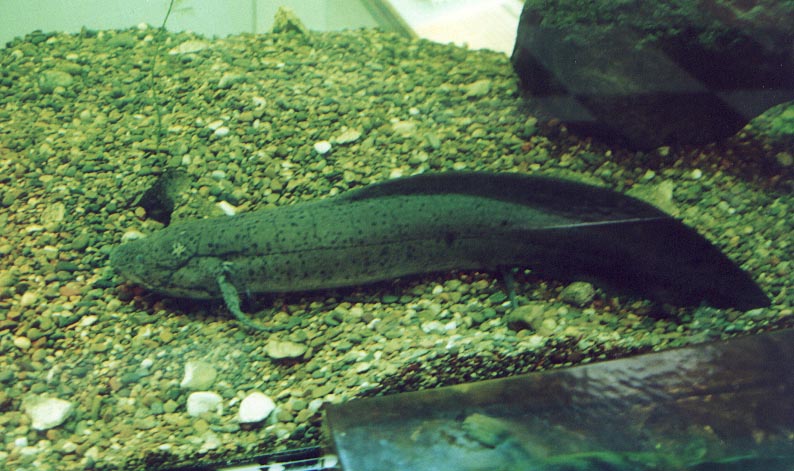
South American Lungfish- this evolutionary curiosity is a hotly-debated ancestor to all tetrapod (four-limbed) animals, an apparrent missing link between fish and amphibians. They are in fact fish, but they breathe air using rudimentary lungs, and in the place of fins, they have wierd, fleshy, limb like tentacles. In my little world, they are present in every decent-sized puddle, you can sit and watch as their little mouths come up to the surface to take a breath, and we even managed to catch one for a closer look. I wouldn´t reccommend handling one if you ever have the chance, they feel incredibly wierd, really slimy and the feel of their little tentacles slapping around is just about the creepiest thing in the world. Super freaking cool though, from a biological standpoint.
Amphibians
Jake, I am hoping that you can give me a bit of a hand here. I really don´t know exactly what species we have running around down here, but as far as I can tell, Leptodactylus sp. are pretty common, as are a wide and never-ending supply of toads. The toads are some of the most common players of Bolivian Whack-a-Mole, and they range from pocket sized to absolutely enormous. We have a pair of especially huge toads (we´re talkin´ POUNDS of toad) that live in the ranch house, and at dusk, the hop out from under the cots where they spend the day, and bonk repeatedly into the door until we let them out. I don´t know how they get back in. I already talked about the tree frogs that live in our well, its always a little wierd to pull up a bucket of water to discover that one or twelve of the little guys waiting to join in the bathing process in their special way. Now that the rains have begun, the frog chorus at night is incredible, with all types of croaks, groans, squeaks, and chirps radiating from every puddle (and a really wierd SPLAT-GRONK!! type noise that the toads like to belt out right next to my tent).
Reptiles
Spectacled and Black Caimen- far and away the most common reptiles I seemed to run into, the Spectacled are little the little turds that hide in my trail and come boiling out of the water snapping and hissing with all the fury that a 3-foot crocodillian can manage (pictured at left). They are essentially harmless, but the first few times I accidentally kicked one while wading through the coriche just about stopped my heart and sent me jumping 20 feet straight up. The Black Caimen are a different story (at right). They only hang out in permanent bodies of water, are big (upwards from 10 feet), and are dangerous. A great reason not to go for a swim in the lakes or rivers. I only saw these big boys occasionally in the lake and along the shore, but one of these times left a strong impression. A baby Capybara was wading around in the shallows one minute, and was torn to pieces by an absolute brute of a caimen the next. They were obviously given a very wide berth and a lot of respect.
Fer-de-Lance- probably the most notoriously venomous, and most greatly feared, snake in the new world tropics. Their name is French for ¨Arrowhead¨ named for their beautiful markings along their back. We found a number of these guys in odd places around camp, where they were either whacked to death with a stick by Alonso, or if I got there before that happened, maneuvered into my (very long-handled) butterfly net and relocated far far away from camp. These guys are only dangerous if you are dumb enough to not respect them for what they are, and are one of my favorite wildlife sightings of the trip, absolutely beautiful.
¨Red-tailed¨ Boa Constrictor- another gorgeous snake. We found a big one, about 8 feet or so long, during a night walk. I can´t really say much more, a very pretty snake, I can see why they are such popular pets.
Misc.- others that are less deserving of a full blurb are a wide array of other snakes and lizards that we happened to come accross. Many of the snakes here are excellent rattlesnake mimics, rustling their tails around in the leaf litter to make a nearly perfect reproduction of the Real Deal (I didn´t see any rattlesnakes, Paco had his boot perforated by one while he was tromping through an obviously snakey area. I did warn him beforehand, but his machismo sent him in there anyway. He listened to me more closely after that). The closest I managed to come to an Anaconda was a dead baby that I found in the trail one morning. I guess I´ll have to wait on that one.
Multi-legged Critters
Mosquitoes. Bees. Ticks. Botflies. Ants. Flies. Scorpions. Spiders. All in abundance. Anything else worth mention at this point is a part of my collection, and I´ll show you once I get home. I am a bit disenchanted with this catergory at present, with good reason. ´Nuff said.
Mammals
Some good stuff here, kids...
Pampas Cat- a very pretty little cat, rare and damn near impossible to find, and one of my prize sightings. I was trudging home one night, and I had stopped to look at a passing bird. As I lowered my binoculars and turned back to my trail, a head popped up in the trail ahead of me, no more than 10 feet away. I froze. In front of me was what I could have mistaken for a huge housecat, if not for its beautiful patterning and wierdly long legs. The eyes. I can´t describe the way that a wild cat´s eyes bore into and through a person, it´s impossible to express, but some sort of a spell just holds you. We stayed like this for at least a minute, until the cat broke eye contact and vanished into the waving grass, leaving no trail, no prints, no trace. An absolute ghost. The cat in the above photo looks seriously pissed off, mine was a lot more composed.
Crab-eating Raccoon and Crab-eating Fox - a couple of funky critters, they make their living largely by feeding on the land crabs that are all over the place (hence the name, duh). They basically are both pretty similar to the ¨basic¨ models of fox and raccoon, but are a lot harder to see and have a strange behavior to them. Cute and fuzzy.
Pampas Deer and Red Brocket Deer- again, variations on the standard deer theme, Brockets are tiny, with little pointy horns. I actually got a chance to touch a live, very wild baby Brocket. I was walking home from the nest one evening and got trapped in a monster downpour. I settled into a crouch and stayed put as soon as it hit, as I was completely exposed in the middle of an open grassland, and it is a pretty dumb idea to be the tallest object around in a raging thunderstorm. The poor little fawn must have been really disoriented by it, because he came bolting out of a patch of high grass, ran straight to me and buried his head between my boots. We stayed like this until the rain passed, at which point Bambi figured out that I was not, in fact, a really great hiding spot, and went stumbling off after his mother, who had been orbiting me and snorting from a safe distance.
The Pampas Deer are another story, they are monstrous, as tall as elk, but they have incredibly long legs, and otherwise look similar to your standard White or Black-tailed Deer. They are pretty jumpy, and they can run in a way I have never seen, they don´t bounce away like White-tails, they gallop with unbelivebly long strides, they look like they are floating. Really impresive.
Giant Anteater- Oh yeah, baby. Another extremely prized sighting, probably the strangest animal I have ever seen. They are known in the Beni as ¨Osobandera¨, literally ¨Flag-bear¨, for the combined effect of their shaggy coats, large size, and their outlandish tail, their ¨flag¨. And the claws. Jeez. They make a living tearing open rock-hard termite mounds, and their claws are ment for business. They have a truly strange gait, at the front end, they walk on the sides of their enormous claws, turning them inward and sort of pigeon-toeing around. They are nearly blind, and rely almost entirely on their sharp hearing and sense of smell. This means that you can get close enough to them to grab them if you wanted, so long as you are downwind and quiet. Grabbing them would be a bad idea though. Not even Jaguars mess with these guys, they´re slow and bumbly, but they can happily rip you a new one if you screw around with them.
Amazonian River Dolphin- Yes, they do exist. They are actually pretty common in the area, they hang out in the main river systems and oxbow lakes. It is really disorienting to see a freshwater dolphin when I am pretty much in the center of the continent, but whatever. Fun, friendly, curious, and playfully goofy. Just what you´d expect from a dolphin. They´re even easier to see in the air, our piolot loves them and always flies super low up the river course so we can see them better.
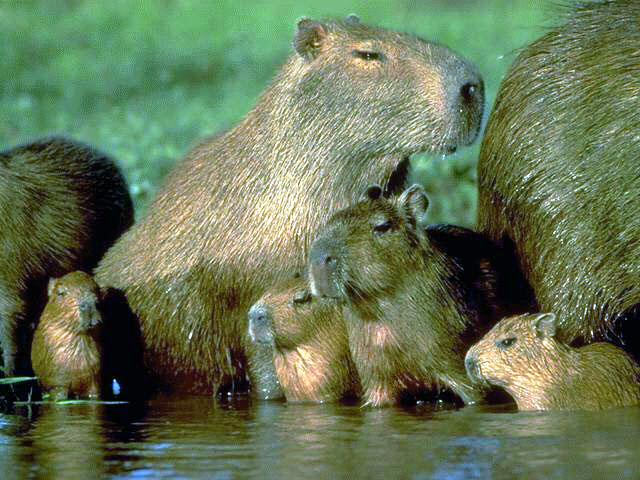
Capybara- the world´s largest rodent, they are about the size of a small pig. Which I think is way too large for a rodent. We always run into the local troop around the coriche at dawn and dusk, and they always greet us with their wheezy, surprized alarm calls, the kind of noise you would get if you punched a congressman of your choice as hard as possible in the stomach. They (the capybaras) always have a really mellow look about them, their eyes always seem half-closed, and they look like they are either super lazy or stoned. Thank God the Vaqueros never made me eat one, they´re really cool, but they just don´t strike me as particularly yummy-looking.
Misc.- In addition to this already huge mammal list, we also saw lots of armadillos, rats, Neotropical River Otters, Howler Monkeys, and a squadron of bats that live in our house. My poor luck with seeing big cats continues, despite the fact that a Jaguar lives in the immediate vicinity of the house, we heard him singing nearly every night, saw his tracks and kills weekly, and we seem to have missed seeing him walk directly past the ranch house by a day, one of the cowboys saw him in broad daylight no more than 30 yards away, exactly one day before I returned from Santa Ana. I really have to break this luck, this is getting riddiculous. Also Heard but not seen was a gorgeous wild dog called a Maned Wolf, would have been great to see, but oh well. I can´t get greedy...

Sunday, October 29, 2006

The Beni: Adventures (4 of 7)

Before I get down to business, just a couple of quick asides. First, if you´re just tuning in, I would reccommend starting with Beni post 1 and working up, if you have the time and patience, it´ll make a lot more sense. Second, for those that have stuck with it, thanks. Third, for those of you that have Facebook, I have been able to post 4 photos Toa took from the field in a new album. For those that don´t, I´ll keep trying to get them up here as well, I´ve been having some trouble with importing photos lately Lastly, I am heading back into the field tomorrow for a couple of weeks or so, I´ll be back out mid-November. Once I´m out, I´ll post the complete Beastie Report, Bird, and Wrap-Up posts before I start my Bolivian wandering. Now, lets get to work...

ADVENTURES
Guayaquíl
Every Sunday, the cowboys from all the ranches in the area get together for a day of relaxing and a very spirited soccer game at Guayaquíl, the central hub and ranch. It is a two to three hour ride, and we usually do it at night by moonlight. It´s a lot cooler at night, and night rides are always fun. The boss, Scander, splits into a broad grin when as he sees us pulling in, and instantly begins feeding us. The central ranch has an entire cooking staff, and makes up some of the best food I´ve had here. Scander´s motto is ¨just a little more¨, and he is an expert at sneaking a little more food onto your plate when you aren´t looking. We then curl up in the myriad hammocks that crisscross the bedrooms, and sleep like rocks (sometimes past 6:30, a rare feat for me recently).
First thing in the morning, everyone strolls out to the airstrip, and makshift goals made of dead palm trunks are dragged out and pounded into place. The teams greet each other, shake hands, and instantly start talking good-natured trash. My team is the Betania/San Pedro/Guantanamo/Guayaquil team and our opposition is made up of Vaqueros from Poema/Carpa/Beya Flor/Uru Campenia. Everyone knows everyone else, and even though it is a ferocious and passionate game, it is all entirely friendly and one heck of a good time. I have become a popular asset for my team. This is not because I´m good at soccer (I suck, in fact), but instead function as a simultaneous good luck charm and excuse. If we lose, my team says its because we have the Gringo, and the other team says the same thing if we win.
After everyone is exhausted, we all go in to eat more. Now that I think about it, I guess we probably spend more time eating than playing soccer on an average Sunday. In any case, the rest of the day is spent sleeping, snoring, drooling, chatting, lazing around, joking, and every possible combination of these activities. Unrelentingly lazy days, and I love every second of it. I have also had some great conversations and met some awesome people at Guayaquíl, the arts of friendly idle banter and philosophizing about life in general are alive and well in the Beni. Once the sun starts edging towards the horizon, everyone saddles up, dishes out some last-minute off-colored humor, says goodbye and wanders off towards their prospective ranches. By far the laziest and most relaxing of my regular adventures.
Guantanamo
This ranch is run by one of my favorite vaqueros and his family, an extremly mischevious and merry man known only as ¨El Gato¨ (The Cat). Gato has a fleet of offspring, a warm and pleasant Brazillian wife called Negra, and finds humor in nearly everything. His oldest two sons, Faran and Jonah are regularly passing through Betania alongside Gato himself, and Faran in particular is fascinated by my Bionculars. He calls them my Long-Views, and looks at everything he can find with them.
Guantanamo is the sister ranch of Betania, and is situated between two shallow lakes, about an hour´s ride from Betania. We have only made it out here twice on our days off, but Gato always asks us when we are coming through next. We always reply ¨Tomorrow¨, and this sends a peal of laughter through Gato. The major activity at Guantanamo is centered around the lakes, and is an occupation that I hold near and dear: fishing.
Our equipment is a spool of thick fishing line wrapped around a chunk of palm wood, and a few ancient fishhooks. These are preferrably baited with scraps from last night´s dinner, spun around to gather up some momentum, and then thrown in a lazy arc as far out into the lake as possible. Since we don´t have a dock, a massive Suho tree that blew down at the lakes edge and reaches far out into the water makes an ideal perch. The lake itself is shallow enough to walk across, but this is unadvisable, considering what sorts of things live in its mocha colored water. In fact, it is a lot like playing ¨Lava Monster¨ on the Monkey Bars as a kid, but for real. People fall in every so often (knee deep), and nothing happens, but any prolonged time in the water is a really stupid idea. This is because our most common catch is Pirhana, but there are plenty of other reasons not to take a dip.
Pirhanas are great fighters, as you would imagine, and the preferred tequnique is to yank on the line as hard as you can once you get a bite, and pull them in as fast as you can to minimize their chances of snipping the line with their legendary teeth. This creates a new problem if you succeed, namely that you have a blindly thrashing, snapping Pirhana tied to you that you have to deal with. My first Pirhana caught me by surprise as I fumbled for my camera, and gave me a souvenier bite on my left index finger, in an uncanny smiley-face design created by his bottom row and two main top teeth. I thought this was terribly fitting, nature has a very sarcastic sense of humor. They taste like trout more or less, a good lead in to my third and greatest adventure...
Mealtime
Vegetarians and generally squeamish people may be glad they didn´t read this...
My decision to incorporate meat back into my diet over the summer to prepare my DI tract for this trip was uncharacteristically wise of me. There is no escaping meat here I am afraid, as it is one of the only foods that is available without being flown in, and when we start running low on our staples of beans and rice, most of our calories come by necessity from meat. The reality of the situation is that if you don´t eat meat here, you plain just don´t eat. I am looking forward to my return to Vegetarinism, but I have adjusted and am enjoying my brief relapse into a meat-based diet.
The adventerous part of mealtime comes with the game I briefly mentioned yesterday, wherin the cowboys prepare a delicious, seemingly benign meal, watch with barely-concealed enthusiasm and amusement as I happily tuck in, and, as I swallow my last bite, then erupt in howls of laughter as they gleefully tell me what I just ate. This unnerved me a bit at first, but I am not really squeamish and its gotten pretty hard to freak me out. At times they seem to forget that I have formal Biological training and therefore a basic understanding of anatomy, such as when I was told the plate placed in front of me one night was ¨steak¨, when it was actually a circular, tube-like muscle (of which there are only a handful in a mammal, use your imagination). To be fair, I have enjoyed everything they have prepared, and I just don´t dwell too deeply on what it is. My expanded palate now includes, but is not limited to the following: Armadillo (a lot like lean pork), Pirhana, Capybara, Caimen (like a cross between fish and chicken, wierd), and nearly every part of the cow that exists, including tounge, heart, liver, udder, ¨the other toungue¨, hoof, cheek, eyes, and a wide variety of circular muscles and organs intended for reprocuction or digestion. Those who find this barbaric and a bit nauseating (like me) can take comfort in the fact that all parts are well cooked, and usually unrecognizable. It is also morbidly gratifying to see that absolutely nothing goes to waste, they really do use everything but the Moo.
The final part of this adventure is the fact that as a member of the ranch, I am expected to help with either the cooking, or the capture and submission of our evening meal. Anyone familiar with my cooking skills knows what tradjedy would occur if that task fell to me, so I am a part of the capture team. My requests to not eat wildlife for their sake have been respected after the first couple of weeks, but the so-called domestic animals are usually harder to catch than wild game. The basic tequnique involves a frantic pursuit, herding, and tackling of whatever unlucky pig, chicken, or cow has been targeted. Once tackled, the others in the chase tie up or subdue the livestock, while the tackle-or holds on for dear life. Thrilling in a very primal sort of way, but is still profoundly sad for me every time to watch the animal´s life slowly fade away. The cowboys don´t believe me when I tell them that many people in the United States have never been there for the death and butchering of their food, it seems as much a part of life as eating the animal to them. At any rate, I have gotten very good at tackling pigs and chickens, but I´m still working out the bugs in my cow-tackling tequnique.
***************************************************
Well, thats basically it for now. Look for the next post on November 16th, its been fun guys. Thanks for tuning in, I look forward to the next time I´ll be hearing from you all. Untill then, Amigos...
-Chris
Santa Ana
Yacuma Province, Beni Department
Bolivia